
San Pedro Market Cusco: What to Eat, Buy and Know

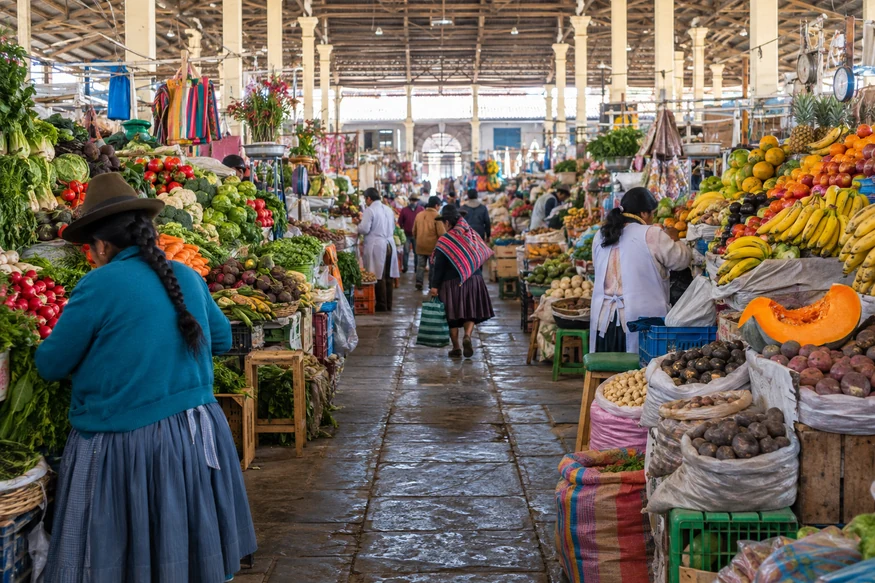
San Pedro Market in Cusco is the city’s best-known covered food market and one of the easiest places to observe everyday local commerce near the Historic Center. Its aisles bring together fruit, vegetables, bread, cheese, meat, medicinal plants, prepared meals, juices and visitor-oriented crafts.
This practical guide explains opening patterns, the best time to visit, what to eat and buy, payment, safety and the walk from Plaza de Armas.
What Is San Pedro Market in Cusco?
Mercado Central de San Pedro is a working municipal supply market, not a staged attraction. Local shoppers use it for ingredients and daily meals, while travelers come to see regional produce and buy practical souvenirs.
The market’s value lies in this overlap. Visit with curiosity while remembering that vendors and customers are conducting ordinary business.
Where Is San Pedro Market?
The market stands beside Plazoleta San Pedro and opposite San Pedro railway station, roughly 600 meters southwest of Plaza de Armas. The route follows Calle Mantas and Calle Marqués toward Santa Clara.
The walk is short but can feel longer during the first days at Cusco’s altitude. Our Cusco altitude guide explains how to plan a gentler arrival.
San Pedro Market Opening Hours
Individual stalls follow different schedules, and Sunday or holiday activity can be reduced. Morning through early afternoon is the safest planning window; verify locally if a specific stall or late visit matters.
Around 9:00–11:00 a.m. usually balances strong market activity with a less intense experience than the earliest wholesale period.
Best Time to Visit San Pedro Market
Choose the morning for the broadest produce selection, active juice counters and cooler walking conditions. Arrive around lunchtime when prepared food is your main interest.
Late visits are quieter but provide fewer choices as some vendors close. Allow flexibility instead of planning the market immediately before a fixed train or airport transfer.
What to Buy at San Pedro Market
Andean Produce
Look for native potatoes, giant corn, quinoa, herbs and seasonal fruit. Fresh agricultural products may be restricted by your destination country’s customs rules.
Chocolate, Coffee and Packaged Foods
Factory-sealed products are easier to transport. Check ingredients, origin and expiration dates.
Textiles and Handicrafts
Compare fiber, finishing and maker information. Not every brightly colored item is handmade or locally produced.
Medicinal Plants
Traditional products are culturally important, but they should not replace professional medical care. Confirm import restrictions before purchasing.
What to Eat at San Pedro Market
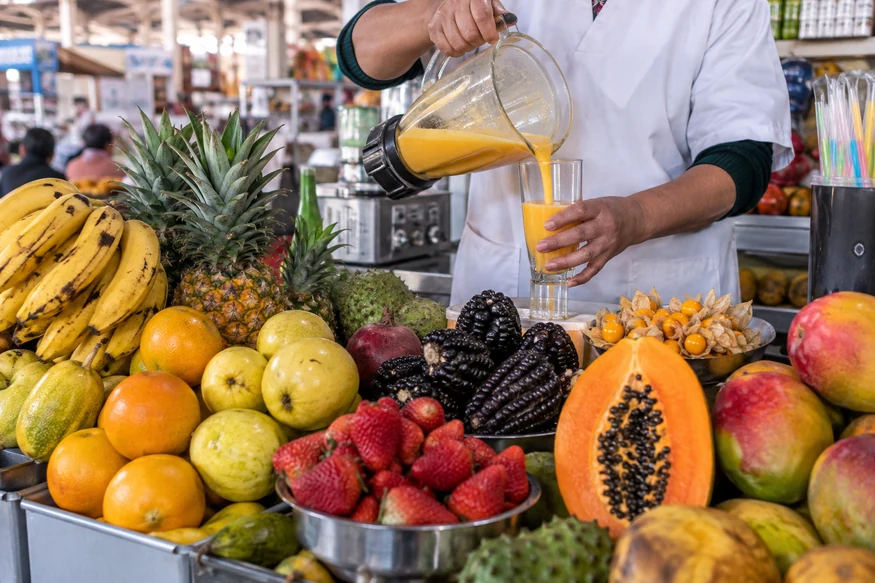
Popular choices include fresh juices, breads, soups, rice dishes and regional plates. Choose busy counters with visible turnover, clean preparation surfaces and hot food served hot.
Recently arrived visitors may prefer lighter meals because altitude can affect appetite and digestion. Drink sealed or properly treated water.
Is San Pedro Market Safe?
The market is busy and generally straightforward to visit, but crowds create opportunities for pickpocketing. Keep phones and wallets secured, close bags and avoid leaving belongings on stools or counters.
Read our guide answering is Cusco safe for transport, nighttime and emergency advice.
Can You Take Photos Inside San Pedro Market?
Photograph products and wide scenes discreetly, but ask before taking a recognizable portrait or recording a vendor at close range. A purchase does not automatically grant permission.
A simple request and genuine interaction produce a more respectful visit than treating the market as a backdrop.
Cash, Cards and Bargaining
Peruvian soles in small denominations are the most dependable payment method. Some businesses accept cards or mobile payments, but connectivity and minimum purchases vary.
Polite negotiation may be possible for crafts, especially several items, but food prices are generally straightforward. Do not push handmade work below a fair value.
San Pedro Market vs San Blas Market
| Feature | San Pedro | San Blas |
|---|---|---|
| Main character | Large working food market | Smaller neighborhood market |
| Best for | Produce, meals, juices and broad browsing | Compact local stop near artisan streets |
| Terrain | Relatively level approach | Steep uphill streets |
| Time needed | 45–90 minutes | 30–60 minutes |
How to Include San Pedro Market in a Cusco Itinerary
Combine it with Plaza de Armas, Santa Clara Arch and Qorikancha during a morning in the Historic Center. The market also works before a cooking class or food-focused walk.
For wider planning, see things to do in Cusco and our complete Cusco travel guide.
Tips for Visiting San Pedro Market
- Visit in the morning.
- Carry small-denomination soles.
- Secure your phone and wallet.
- Ask before photographing people.
- Eat at clean, active counters.
- Check customs rules before buying food or plants.
- Arrange a pickup if continuing directly to the airport or Sacred Valley.
Frequently Asked Questions
Is San Pedro Market free?
Yes, there is normally no admission fee.
How far is it from Plaza de Armas?
It is roughly 600 meters, usually an eight-to-ten-minute walk depending on pace and crowds.
Is San Pedro Market worth visiting?
Yes, especially for travelers interested in local ingredients, food culture and everyday city life.