
Huaro Cusco: San Juan Bautista Church Visitor Guide

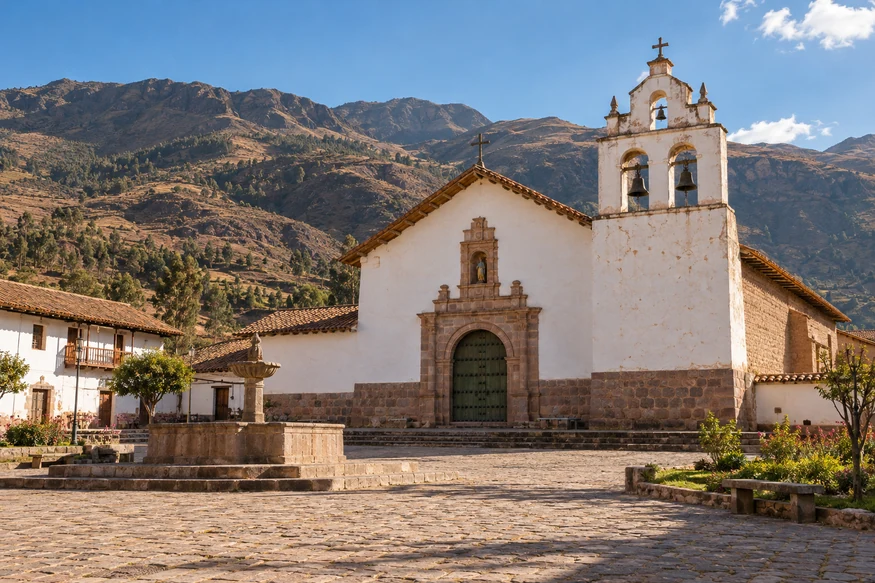
Huaro, Cusco, is a small South Valley town best known for the Church of San Juan Bautista, whose dramatic murals by Tadeo Escalante form one of the highlights of the Andean Baroque Route. The town lies southeast of Cusco and combines naturally with Andahuaylillas, Canincunca and other stops toward Urcos.
What Is Huaro, Cusco, Known For?
Huaro is known for San Juan Bautista Church, a rural colonial temple filled with murals, altarpieces, paintings and sculpture. The church belongs to the Andean Baroque Route, a cultural circuit that connects religious art and living communities south of Cusco.
The town is a working community rather than an open-air museum. Visit respectfully, follow photography rules and avoid disrupting religious services.
Where Is Huaro?
Huaro lies in Quispicanchi Province, southeast of Cusco on the road toward Urcos. Peru’s official tourism inventory places the church about 43.5 kilometers from Cusco’s Plaza de Armas, with a reference travel time of approximately one hour and eight minutes.
Road time can increase with traffic, weather or planned stops in the South Valley.
History of San Juan Bautista Church
The church was built between the late sixteenth and early seventeenth centuries. Its structure uses stone and adobe beneath a tiled roof, while a three-level bell gable with six bells defines the exterior.
San Juan Bautista has been recognized as Cultural Heritage of the Nation since 1972. It also forms part of the Rural Temples of Cusco group placed on UNESCO’s Tentative List in 2019.
The Murals of Tadeo Escalante
The best-known paintings are early nineteenth-century murals attributed to Tadeo Escalante. Their imagery addresses death, judgment, glory and hell, using vivid scenes to communicate religious teaching.
These murals are historically significant works, not decorative props. Observe them from permitted areas and never use flash or touch painted surfaces.
What to See Inside the Church
The Presbytery Ceiling
The presbytery includes a Mudejar-style artesonado, an ornamental wooden ceiling that reflects the artistic exchange visible throughout the temple.
The Main Altarpiece
The baroque main altarpiece is associated with Martín de Torres and provides a focal point for the church interior.
Paintings and Sculpture
The official inventory records more than sixty sculptures, around fifty paintings, silverwork and several altarpieces. A guided visit helps distinguish the different periods and functions.
Huaro Church Tickets
Peru’s current official tourism inventory lists a combined Andean Baroque Route ticket for Andahuaylillas, Huaro and Canincunca. At the time of that update, the stated price was S/10 for Peruvian adults, S/18 for foreign adults and S/10 for students; Cusco residents with ID and children up to ten were listed as free.
Prices, inclusions and sales rules can change. Confirm the current ticket directly with the Andean Baroque Route before travel.
Huaro Church Opening Hours
Do not rely on a fixed online schedule without reconfirming it. Religious services, conservation work, local events and holiday arrangements can affect visitor access.
Ask the route operator or your driver to verify opening hours before the vehicle leaves Cusco.
How to Get from Cusco to Huaro
Huaro is reached by road through the South Valley. Private transport is practical because it coordinates several dispersed heritage stops and avoids waiting for changing local connections.
Use the South Valley private transfer for a flexible vehicle plan, or choose the South Valley Cusco tour when guiding and a complete route are required.
Huaro on the Andean Baroque Route
The formal route connects Andahuaylillas, Huaro and the Chapel of Canincunca, with other cultural experiences possible farther south. Each temple has a distinct artistic program, so Huaro should not be treated as a substitute for the better-known Andahuaylillas church.
Buy the correct combined ticket and confirm how much time is available at each stop.
Huaro and Andahuaylillas
Andahuaylillas is the natural companion visit. Its richly decorated Church of San Pedro contrasts with Huaro’s dramatic Escalante murals while explaining the wider Andean Baroque tradition.
Allow at least 45 to 60 minutes per church when interpretation matters, plus road and ticket time.
Huaro vs Oropesa
| Factor | Huaro | Oropesa |
|---|---|---|
| Main interest | Colonial art and religious heritage | Pan chuta and living food tradition |
| Visit style | Ticketed church interior | Town and bakery stop |
| Best pairing | Andahuaylillas and Canincunca | Tipon and South Valley food stops |
| Planning need | Confirm opening times and private transport before departure | |
The two towns complement each other on a private South Valley day rather than competing for the same experience.
Accessibility and Visit Conditions
The official inventory notes accessibility improvements and recognition through the Tur4all accessibility platform. Individual needs still vary, and old religious buildings can present thresholds, uneven surfaces or restricted areas.
Contact the route in advance to confirm step-free access, restroom conditions, seating and vehicle approach for the day of your visit.
Responsible Heritage Visit
Dress appropriately for an active church, silence your phone and obey all photography restrictions. Never touch paintings, altarpieces or sculptures. Buy tickets through authorized channels so conservation and local cultural work can benefit.
Frequently Asked Questions
Is Huaro worth visiting?
Yes for travelers interested in colonial art, mural painting, religious architecture or a deeper South Valley itinerary.
Can you visit Huaro and Andahuaylillas together?
Yes. They are core stops on the Andean Baroque Route and work naturally in one coordinated day.
How long do you need at Huaro Church?
Allow about 45 to 60 minutes for a guided interior visit, excluding ticketing, transport and other route stops.