
Oropesa Cusco: Pan Chuta, History and Visitor Guide

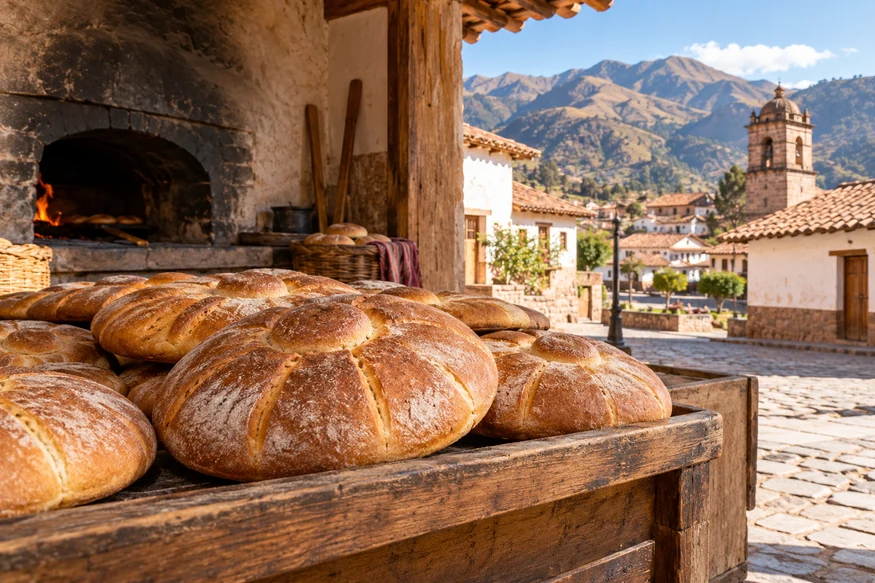
Oropesa, Cusco, is a South Valley town celebrated for pan chuta: large, round loaves whose baking tradition has become part of the town’s identity. Its bakeries, plaza and convenient location near Tipon make Oropesa a useful cultural and food stop southeast of Cusco.
What Is Oropesa, Cusco, Known For?
Oropesa is nationally associated with traditional bread production. Peru’s Congress recognized the district as the National Capital of Bread, highlighting a baking tradition that blends Andean ingredients, colonial-era influences and knowledge maintained by local families.
The town is not a themed attraction. Bakeries are working businesses and the streets serve residents, so visit respectfully and buy from local producers rather than treating the process only as a photo opportunity.
Where Is Oropesa in Peru?
Oropesa lies southeast of Cusco in Quispicanchi Province, on the road toward Urcos and Puno. It is roughly 20 kilometers from the city and sits at approximately 3,100 meters above sea level.
Its position places it naturally between Cusco and the wider South Valley route.
What Is Pan Chuta?
Pan chuta is a broad, round bread associated especially with Oropesa. Recipes vary by bakery, but the bread is generally known for a slightly sweet, aromatic profile and a firm crust suited to sharing or carrying on a journey.
Some loaves are decorated or personalized for celebrations. Ask the baker about ingredients when allergies or dietary restrictions matter because recipes are not standardized across every shop.
Why Is Oropesa the Capital of Bread?
Bread production has shaped local work, trade and identity for generations. Formal recognition as Peru’s National Capital of Bread acknowledges the cultural importance of the activity rather than certifying that every loaf or bakery follows one identical method.
Indecopi has also reported a collective mark connected with Oropesa’s pan chuta tradition, supporting organized local producers.
Visiting an Oropesa Bakery
Not every bakery offers a public demonstration. If seeing the oven or production process is important, arrange the visit in advance through a local host, guide or operator. Follow hygiene rules and do not enter working areas without permission.
Buying directly is the simplest way to support the tradition. Carry a clean reusable bag and handle the bread carefully if you plan to travel onward.
How to Get to Oropesa from Cusco
Oropesa is reached by road southeast from Cusco. Private transportation is the easiest option for a coordinated bakery visit and for travelers combining several dispersed South Valley stops.
The South Valley private transfer provides a flexible vehicle plan, while the South Valley Cusco tour is appropriate when guiding and a complete route are needed.
Oropesa and Tipon
Oropesa is close to Tipon, the Inca archaeological park known for terraces and flowing water channels. The pairing works well because one stop focuses on living food culture and the other on Inca engineering.
Allow enough time at Tipon before planning a bakery visit; archaeological access and production schedules do not always align.
Oropesa on the South Valley Route
A broader route can connect Oropesa with Tipon, Pikillaqta and Andahuaylillas. These stops cover Inca hydraulic design, Wari urban history, colonial religious art and a living baking tradition.
Travelers continuing toward Puno may also read the guide to Raqchi, but Raqchi is much farther south and requires a different time plan.
How Long Do You Need in Oropesa?
Allow 45 to 90 minutes for the town center, a planned bakery stop and bread purchases. Add more time if a demonstration has been confirmed. A quick roadside purchase is possible, but it does not provide much context for the tradition.
Best Time to Visit Oropesa
Morning is practical because bakeries may be active and the town can be combined with a full South Valley day. Individual businesses set their own hours, and production may change around holidays or local events, so confirm any special visit.
Road conditions are generally more predictable in the dry season, while wet-season traffic can increase travel time.
Oropesa vs Andahuaylillas
| Factor | Oropesa | Andahuaylillas |
|---|---|---|
| Main interest | Pan chuta and local food culture | Andean Baroque church and art |
| Visit style | Town and bakery stop | Heritage and religious-art visit |
| Typical time | 45–90 minutes | 45–90 minutes |
| Best pairing | Tipon and Pikillaqta with planned transport | |
They complement rather than replace each other on a South Valley itinerary.
What to Buy and How to Carry It
Choose the loaf size according to your onward plans and ask how long the bread is expected to keep. Large pan chuta loaves are ideal for sharing but can be awkward in hand luggage.
- Ask the baker about ingredients and freshness.
- Use a breathable bag instead of sealing warm bread in plastic.
- Keep heavy items from crushing the loaf.
- Declare food when required by the rules of your next destination.
Responsible Food Tourism
Ask before photographing people, ovens or working spaces. Pay the stated price, avoid obstructing customers and respect hygiene instructions. A bakery visit should support local producers without interrupting their production.
Frequently Asked Questions
Is Oropesa worth visiting?
Yes for travelers interested in regional food, local traditions or a richer South Valley itinerary.
Can you visit Oropesa and Tipon together?
Yes. Their proximity makes them a natural combination with private transport or a planned South Valley tour.
Is there an entrance ticket for Oropesa?
There is no general ticket to enter the town. Bakery purchases, demonstrations and nearby attractions have their own arrangements.