
Is Cusco Safe? Essential Safety Advice for Travelers

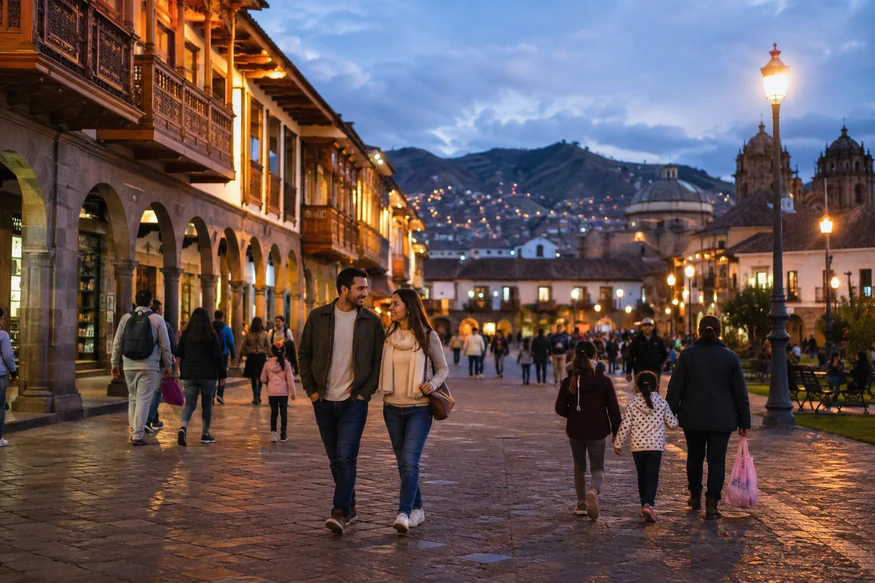
Is Cusco safe? Most visitors explore Cusco, the Sacred Valley and Machu Picchu without a serious incident, but Cusco is not risk-free. The most relevant concerns for travelers are pickpocketing, phone and bag theft, unlicensed transportation, nighttime vulnerability, occasional protests and the practical risks of altitude or remote excursions.
The sensible approach is neither fear nor complacency. Use verified transportation, protect valuables, avoid isolated streets after dark, monitor local conditions and keep enough flexibility for road or rail disruptions.
Current official travel advice for Cusco
The U.S. Department of State currently places Peru at Level 2: Exercise Increased Caution because of crime, civil unrest and other risks. Its advisory specifically explains that the city of Cusco and popular nearby destinations—including the Sacred Valley, Inca Trail and Machu Picchu—are not inside the restricted VRAEM area.
British and Australian travel guidance also warns about street crime, theft, nighttime risks, demonstrations and transport disruption. Advice can change, so read the latest guidance from your own government before departure rather than treating any blog as a permanent security notice.
Safety risks at a glance
| Situation | Most realistic concern | Practical precaution |
|---|---|---|
| Historic Center and busy attractions | Pickpocketing and distraction theft | Keep phones and wallets secured; do not leave bags on chairs |
| Airport and bus terminals | Unverified drivers or confusion during arrival | Use an official desk, hotel-arranged car or confirmed pickup |
| Quiet streets after dark | Mugging or unwanted attention | Avoid walking alone and arrange door-to-door transport |
| ATMs and cash exchange | Card theft, observation or counterfeit notes | Use ATMs inside banks or major buildings during business hours |
| Bars and nightlife | Drink spiking, excessive alcohol or theft | Watch drinks, stay with trusted companions and plan the return trip |
| Strikes and protests | Roadblocks, train cancellation and delays | Avoid gatherings, monitor updates and keep schedule flexibility |
Is Cusco’s Historic Center safe?
Plaza de Armas and the principal Historic Center streets are active throughout the day and early evening. Hotels, restaurants, shops and visitors create regular foot traffic. That does not eliminate petty theft: crowded sidewalks, markets, queues and busy viewpoints provide opportunities for a phone or wallet to disappear quickly.
Carry only what you need, keep your passport secured at your accommodation when appropriate, and avoid holding a phone toward the street for long periods. A cross-body bag worn closed and in front is more practical than an open backpack in a crowd.
San Blas is popular and atmospheric, but its narrow lanes become quieter and steeper away from the central streets. After a late dinner, travelers unfamiliar with the area may prefer a registered taxi or private pickup rather than navigating a secluded route on foot.
Arriving safely at Cusco Airport
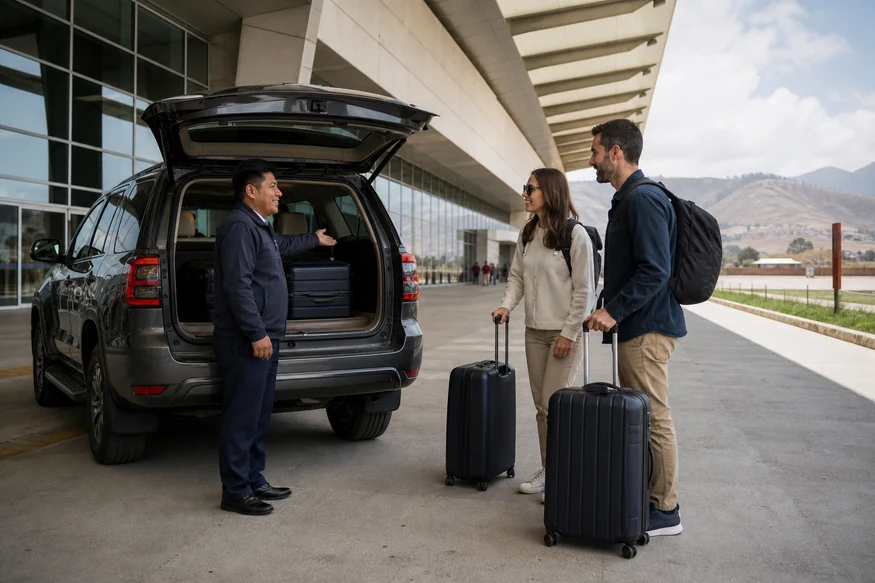
Arrival is when travelers are tired, carrying valuables and trying to make quick decisions. Before flying, confirm who will meet you, where the meeting point is and how you will recognize the driver. Do not accept an unsolicited ride simply because someone knows the name of your hotel.
A pre-arranged Cusco airport-to-hotel private transfer provides a known vehicle and direct destination. Compare arrival options in our guide to getting from Cusco Airport to the city center.
Taxi and private transportation safety
Official travel guidance advises using licensed, app-based, hotel-arranged or otherwise verified vehicles instead of hailing an unknown car on the street. Check that the vehicle and driver match your confirmation before boarding. Share the trip details with a companion when traveling alone.
Inside any vehicle, keep doors locked and avoid displaying a phone beside an open window in slow traffic. Secure bags away from easy reach and do not leave passports, cameras or electronics visible in a parked car.
Our comparison of a private transfer versus a shared colectivo in Cusco explains the differences in pickup, luggage handling, schedules and privacy.
Walking in Cusco at night
Central restaurant areas can remain lively after sunset, but conditions change within a few blocks. Avoid shortcuts through empty alleys, poorly lit stairways and unfamiliar residential streets. Do not walk alone while visibly intoxicated or focused on your phone.
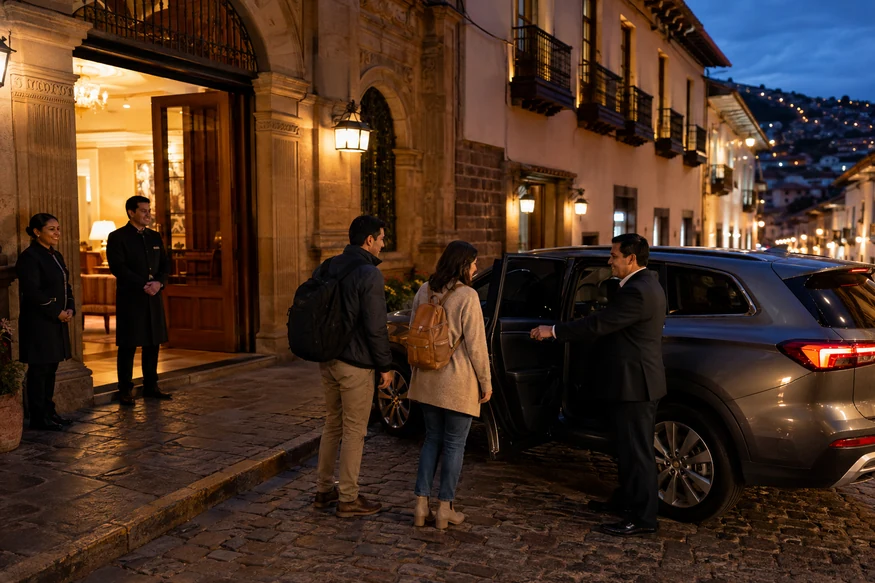
Plan the return before going out. Ask the restaurant or hotel to call a vehicle, use a recognized app when available or book a known driver. Door-to-door service is especially useful for hillside accommodation, families, solo travelers and late arrivals.
Safety for solo and female travelers
Many solo travelers visit Cusco, but independence should come with clear routines. Tell someone where you are going, use accommodation with reliable recent reviews, keep control of your drinks and avoid isolated places with people you have only just met.
Personal and sexual assaults are not the most common visitor incident, but official advisories confirm they occur. Trust discomfort early: leave a venue, call your hotel or contact emergency services rather than worrying about appearing impolite.
Phones, bags, ATMs and money
- Use ATMs inside banks, supermarkets or major commercial buildings during business hours.
- Do not accept help from strangers at an ATM.
- Avoid street money changers and learn the appearance of current Peruvian soles.
- Keep a small daily amount separate from backup funds.
- Do not place a phone on an outdoor café table near the street.
- Keep your passport, cards and cash in more than one secure location.
- Back up important documents securely before the trip.
Protests, strikes and transportation disruption
Demonstrations and strikes can develop with limited notice and may affect roads, airports and trains to Machu Picchu. Foreign visitors should not participate in political demonstrations. Avoid crowds, follow local authority instructions and contact your transport or rail provider when disruption is reported.
Build buffer time before an international flight and avoid placing separate, non-changeable bookings too close together. During the rainy season, weather can also affect mountain roads and rail services; safety decisions may require delaying a departure.
Altitude and adventure safety
Cusco’s elevation is a health consideration separate from crime. Make arrival day light, recognize worsening symptoms and do not schedule a very high excursion immediately after landing. Read our detailed Cusco altitude and acclimatization guide.
For trekking, cycling, rafting or remote day trips, use a qualified provider, understand what insurance covers and confirm communication and emergency procedures. Weather, road conditions and rescue access matter more outside the city.
Emergency numbers and assistance
Save your insurer’s assistance line, accommodation number and embassy or consular contact. The official U.S. advisory also lists iPerú tourist assistance on WhatsApp: +51 944 492 314. Confirm current local numbers after arrival because services and regional coverage can change.
If a robbery occurs, prioritize personal safety rather than resisting. Move to a secure location, contact police, cancel affected cards and ask your accommodation or insurer what documentation is required.
Reliable transportation in Cusco

Cusco Airport Transfer
Begin with a confirmed driver, suitable luggage space and direct transport to your hotel or accommodation.

Private Cultural Transport
Coordinate hotel pickup, planned stops and return transportation for cultural sites around Cusco.
Frequently asked questions
Is Cusco safe for tourists in 2026?
Cusco’s main tourist areas continue to receive visitors, but current government guidance recommends increased caution in Peru. Travelers should protect belongings, use verified transport and monitor civil unrest or service disruption.
Is it safe to walk around Cusco?
Busy central areas are commonly explored on foot during daylight. At night, avoid quiet or poorly lit streets and use arranged transportation when the route is unfamiliar.
Are taxis safe in Cusco?
Use a registered, app-based, hotel-arranged or pre-booked vehicle. Confirm the driver and vehicle rather than accepting an unsolicited street offer.
Is Cusco safe for solo female travelers?
Many visit independently, but precautions are important: control drinks, share plans, avoid isolated areas and use known transportation at night.
Is the Sacred Valley safe?
Popular Sacred Valley sites are not inside the VRAEM restricted area identified by the U.S. advisory. Road, weather, theft and protest-related disruption still require normal precautions.
What should I do if my passport is stolen?
Report the theft, contact your embassy or consulate and confirm airline requirements before attempting a domestic flight. Keep a secure digital copy to support the replacement process.
Final safety advice
Cusco can be visited confidently when you make ordinary urban precautions part of the plan. Protect valuables, verify drivers, arrange nighttime transport and remain flexible when protests or weather affect travel. Check official advice close to departure because conditions can change.
Safety is not created by one expensive service or one neighborhood. It comes from a series of sensible decisions—from your airport pickup and accommodation to how you carry a phone, choose an operator and respond to changing conditions.