
Urcos Peru: Lagoon, Things to Do and Visitor Guide

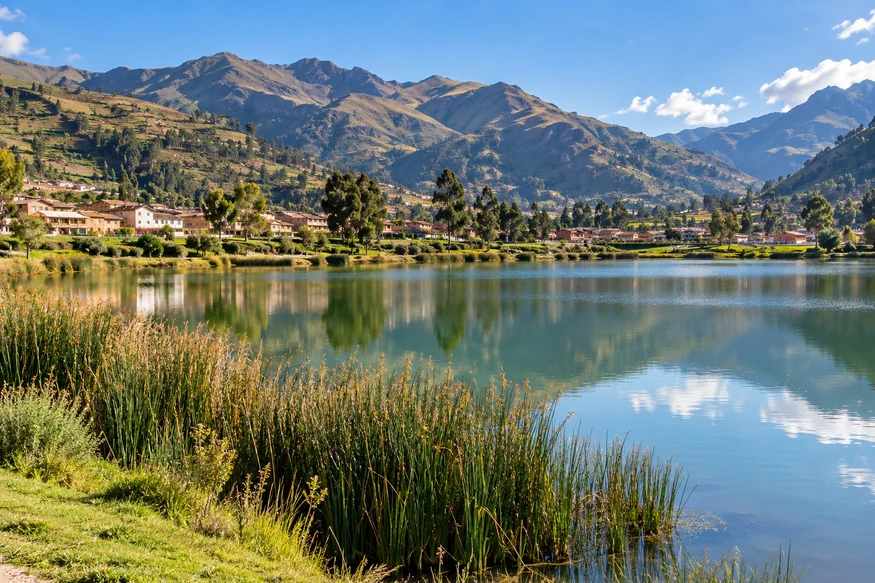
Urcos is a South Valley town southeast of Cusco, known for its central plaza, traditional market connections and the nearby Urcos Lagoon, also called Qoyllur Urmana. It is a practical cultural and scenic stop on routes toward Canincunca, Raqchi, the Cusco–Puno road and Rainbow Mountain departures.
Where Is Urcos in Peru?
Urcos is the capital of Quispicanchi Province in the Cusco region. It lies on the main road southeast from Cusco, beyond Andahuaylillas and Huaro, and functions as a transport and service center for surrounding districts.
Its location makes Urcos more useful as part of a planned South Valley or onward journey than as a separate long day trip.
Is Urcos Worth Visiting?
Urcos is worth a stop for travelers interested in a working Andean town, the lagoon and a less tourist-focused view of the South Valley. It is not a substitute for the archaeological scale of Tipon, Pikillaqta or Raqchi.
Allow a short stop when traveling farther south, or a slower visit when the lagoon and local context are important to you.
Urcos Lagoon: Qoyllur Urmana
Peru’s official tourism inventory records the lagoon as a natural and culturally significant site associated with water traditions and the surrounding Andean landscape. Reeds and aquatic birds occupy parts of the shore, while public green areas and viewpoints provide easy landscape access.
The same inventory places the lagoon at about 3,163 meters above sea level and describes it as approximately 100 meters, or a five-minute walk, from Urcos’s main plaza.
Things to Do in Urcos
Walk from the Plaza to the Lagoon
The short connection makes it possible to see both the civic center and the water landscape without a complicated transfer. Use public paths and keep away from fragile reed beds.
Observe the South Valley Landscape
Hills, farmland and the Vilcanota corridor help explain Urcos’s regional role. Morning light is often preferable for photography.
Use Urcos as a Route Stop
Urcos has restaurants, fuel, shops and other services. Confirm quality and opening hours locally rather than assuming every business follows a tourist schedule.
Urcos Lagoon Entrance and Access
The official tourism inventory updated in 2025 lists general entrance to the lagoon as free. Local activities, parking, food or special events may still have separate charges.
Conditions can change, so follow current municipal signs and respect any temporary closure, maintenance area or event restriction.
How to Get from Cusco to Urcos
Private transportation is the simplest option for a visitor because it combines Urcos with heritage stops and provides a reliable onward journey. Shared transport serves the corridor, but departure points and stopping arrangements should be checked locally.
For a guided cultural route, consider the South Valley Cusco Tour. Travelers continuing deeper into the valley can reserve private transportation to Raqchi.
Urcos and the Andean Baroque Route
Urcos lies close to the eastern end of the core Andean Baroque circuit. Combine it with the churches of Andahuaylillas, Huaro and Canincunca Chapel.
The lagoon adds an outdoor landscape stop after several church interiors, but it should not shorten the time needed to understand the art and living religious role of each temple.
Urcos and Raqchi
Raqchi is farther south and requires additional road time. Its Temple of Wiracocha, enclosures and storage structures make it the stronger archaeological destination, while Urcos works as a practical pause and local landscape stop.
Private transport is especially useful when combining both because it allows a confirmed return plan and avoids turning the day into a series of uncertain connections.
Urcos vs the Main South Valley Sites
| Place | Main reason to visit | Typical role |
|---|---|---|
| Urcos | Lagoon and working town | Scenic or service stop |
| Tipon | Inca water engineering | Core South Valley attraction |
| Pikillaqta | Wari urban planning | Core archaeological stop |
| Raqchi | Temple of Wiracocha | Longer southbound itinerary |
Urcos complements these sites instead of competing with their primary search intent.
Best Time to Visit Urcos
Dry-season months usually provide more dependable road and walking conditions. Wet-season months bring greener scenery but can also mean rain, cloud and travel delays.
Visit the lagoon in daylight and avoid the water’s edge during storms. For any cultural event, verify the current date and visitor arrangements with local authorities.
Altitude and What to Bring
Urcos is lower than central Cusco but still above 3,000 meters. Travelers arriving directly from low altitude should move slowly, hydrate and postpone strenuous activity.
- Warm layer and waterproof jacket
- Hat, sunglasses and sunscreen
- Water and personal medication
- Closed shoes for uneven or wet ground
- Small Peruvian soles for local purchases
Responsible Visit to Urcos Lagoon
Do not leave food packaging, enter reed beds, feed birds or use soap near the water. Keep noise low and follow municipal instructions around landscaped areas.
Ask permission before photographing residents, vendors or ceremonies. The lagoon is a local cultural landscape, not just a roadside photo opportunity.
Frequently Asked Questions
Is Urcos Lagoon free to visit?
The official 2025 tourism inventory lists general access as free, but separate services or events may have charges.
How long do you need in Urcos?
Allow about 45 to 90 minutes for the plaza and lagoon, excluding meals or other South Valley stops.
Can you visit Urcos and Raqchi in one day?
Yes with an early start and coordinated private transport. Add church stops only if the schedule still allows meaningful time at each place.